When people are displaced by war and famine, and forced to live in tent cities, far from home, without basic services, children suffer many hardships and deprivations. Not only do they face the hardship of displacement and the perils of living on the move; they also experience deep deficits in their opportunities to learn, grow, find their talent, develop community bonds, and fully manifest their personal talents in the future.
The United Nations Refugee Agency (UNHCR) knows this well, from experience of supporting the most vulnerable people forced to live far from home. This is what motivated the creation of UNHCR soccer balls, designed around artwork created by young people who know this experience, and the many acts of kindness and generosity it takes to overcome it.
Soccer is known as “the Beautiful Game”, because the ball floats around a vast green expanse, moving in careful arcs, sometimes in a flare of panic, always demanding a burst of athleticism from those seeking to take it to the goal or stop it from getting there, and because in almost every case, a goal materializes only when a whole team does a series of things just right, in a sequence that works only for that play.
To be excellent in soccer requires talent, hard work, and grace, and an understanding of how a team of 11 comes together to make each moment possible. All of this makes soccer a great way to bring young people together, even in the midst of profound hardship and vulnerability, to learn about what works and what does not work, and to build relationships that are based on something real.
This year’s World Cup is jointly hosted by the United States, Canada, and Mexico—all three nations of immigrants and refugees, all three modern democracies built around the principle that human rights are paramount. No nation is perfect; no nation is ideal or maintains its noblest demeanor at all times, but sport gives us the opportunity to pause, and to think about rules and principles and character and excellence.
The World Cup brings people together to celebrate the joy of being human, to honor the beauty of the Beautiful Game and the complexities that go into playing it well. Being human is more than existing, and it is more than being from one place or embodying a culture. There are challenges we all face, in our way, and there are examples of excellence we have to recognize as examples of what is best in our common humanity.
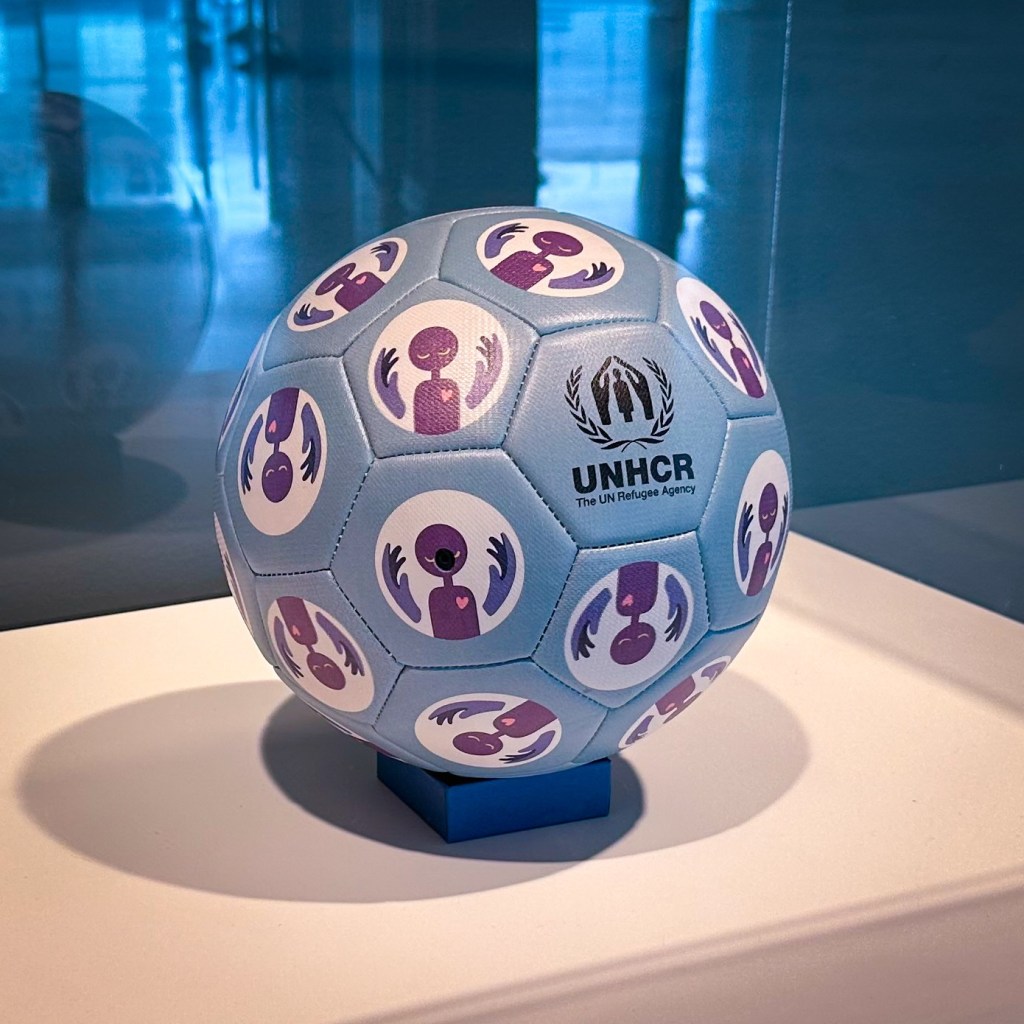
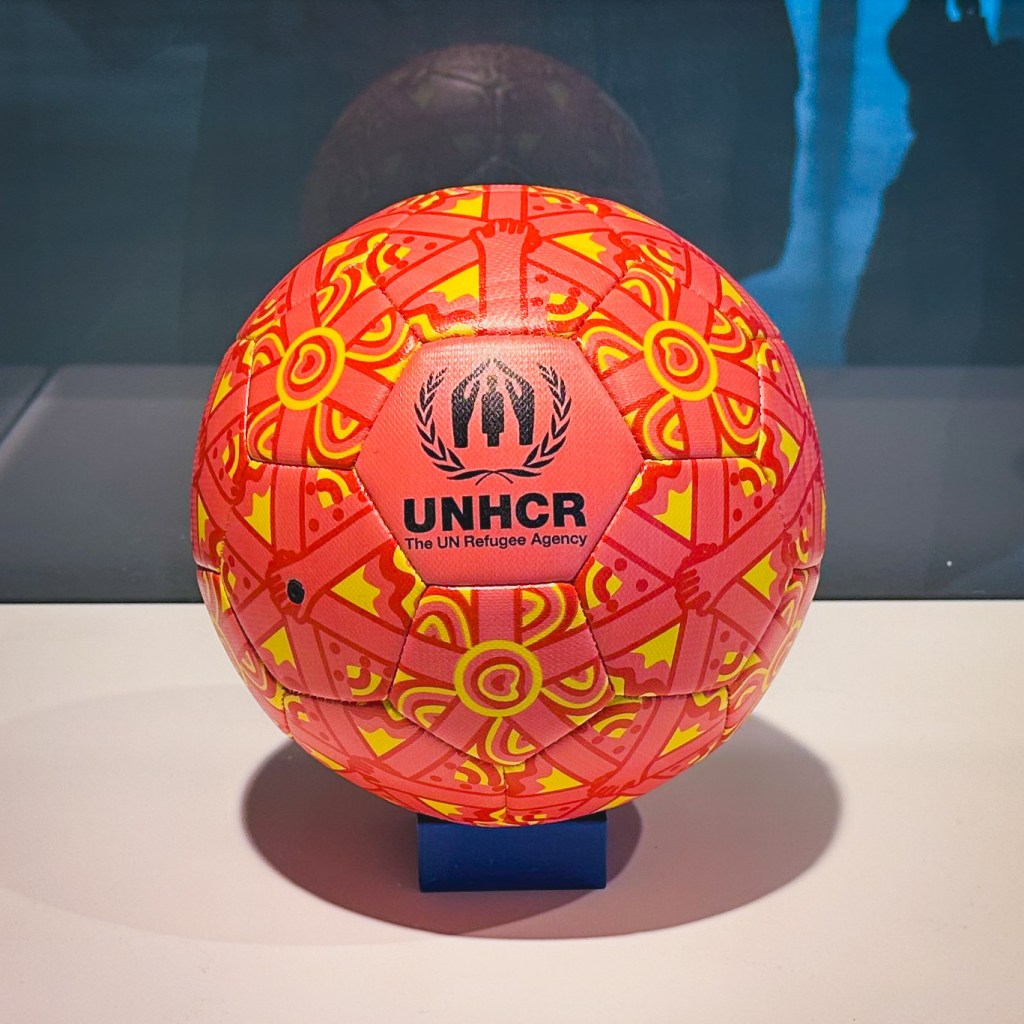
The UNHCR ‘Dream Ball’ soccer balls are meant to evoke all of this, and to remind us all that there are tens of millions of people involuntarily displaced, facing hardship, and wondering when they will find stability and security again.
- Thuria, who made the art on the blue soccer ball, wrote that “one could say that the hands are holding refugees gently, and the heart highlights the fact that refugees are people with feelings and hopes.”
- Maria, who made the art on the red soccer ball, explained: “I drew hands joined as in a team and a colorful heart. If they are united, it makes the arms connect with the lines next to the heart. Symbolizing how our love and support can help refugees and all the people in the world overcome difficulties.”
How we treat the most vulnerable people, at home and around the world, is the measure of our quality as a culture and as nations. We are safer in our humanity, our dreaming, and our freedom, when we honor our responsibilities to others who face those things being taken from them.
The proceeds from purchase of UNHCR Dream Balls will help to fund soccer and other sports programs for refugee children, and help to bring education, empowerment, personal growth, and opportunity to some of the world’s most vulnerable.
Let’s translate the inspiration of the World Cup into actions and partnerships that lift up those who right now face the worst hardships. Let’s make the future better than the past.