
Climate value is the overall picture of climate-related risk and resilience, tied to and working through planetary systems, local ecology, and the instruments of sustainable human development. Climate value is not priced by the marketplace for consumer goods, so we need to make a conscious effort, as individuals, communities, and at the policy level, to reveal it.
The climate change redline is not drawn at anyone’s whim; it is set by the balance of Nature and its ability to support safe and livable conditions for all people. When Nature can no longer achieve that, due to disruptions to Earth’s climate system, we have crossed the redline into persistent, cascading, and destabilizing climate risk, impact, and cost.
Most financial assets are significantly affected by the balance of hidden costs and co-benefits that adds up to positive or negative climate value, but also avoid detailed assessments of climate risk and resilience.
- One reason for this is that we do not have a standard, proven assessment that is universally used; many are waiting to see what gets adopted by peers and rivals.
- Another reason is that many businesses depend on these hidden costs not being counted; they are dependent on society and Nature carrying the cost for them.
- It is also the case that the costs of climate disruption are evolving, and getting worse; yesterday’s assessment can be superseded as costs pile up.
The Climate Value Exchange is a forum for insight-sharing, cooperative problem-solving, brainstorming of best-case policy design features and best-case future scenarios, and for working across sectors and across borders to build climate value into the fabric of the everyday economy. It was established in 2024 to carry forward the work—conceived through stakeholder dialogues before the Paris Agreement—of fostering future-building climate cooperation among groups of nations.
In 2026, the Exchange is underdoing a process of recalibration and upgrading. The recalibration aims to bring leaders, stakeholders, and experts, in to a series of events focused on Resilient Prosperity planning, policy, and investment. This Resilient Prosperity Forum will be a collaboration with the Active Value Project and other partners in advocacy, scholarship, and climate assessment.
Salted has provided design assistance in establishing a new Climate Value Exchange look and feel.
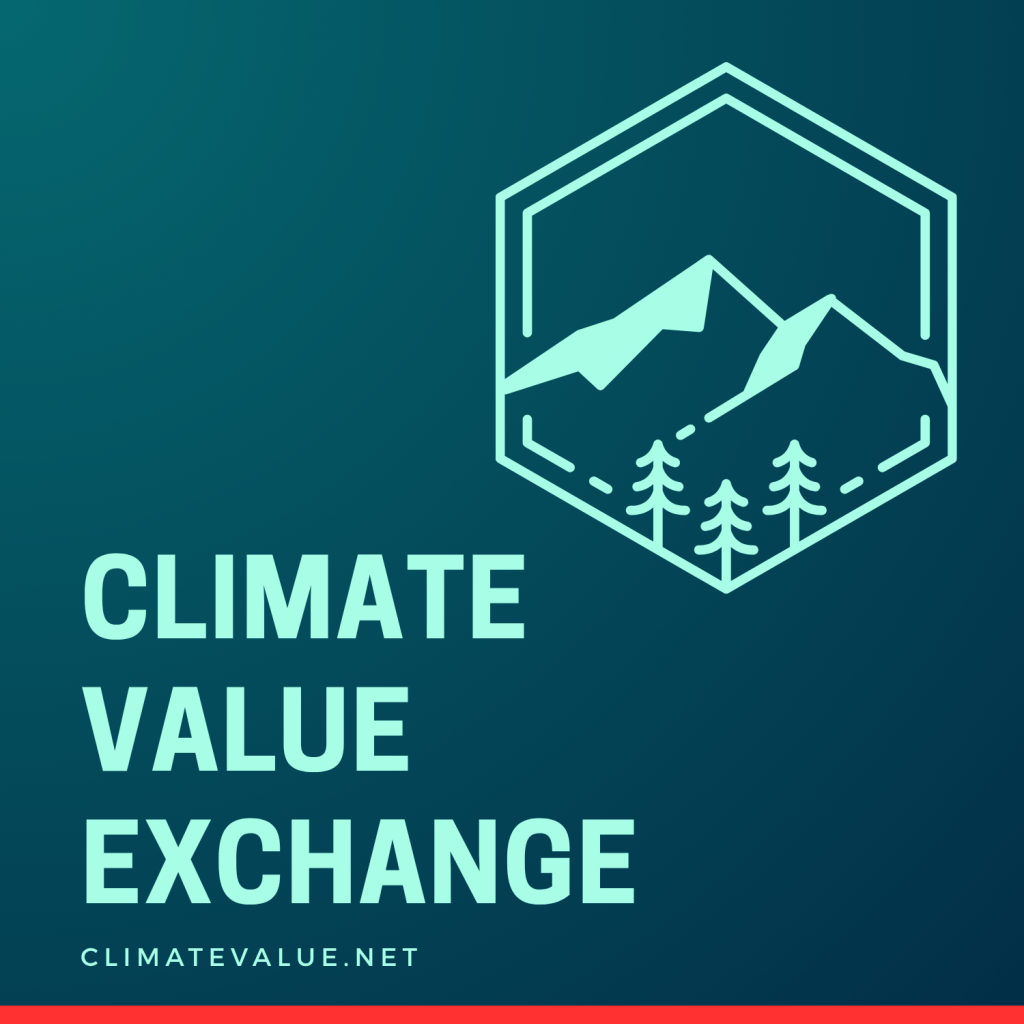
The logo uses the hexagon shape—which evokes the carbon molecule which makes life on Earth possible and also is central to the heat-trapping compounds that keep Earth from freezing but can overheat our planet if dumped in excess into the atmosphere. The hexagon contains mountains and forests, and shows snowpack and abstract representations of watersheds.
There is a safe inner space and an outer limit, an evocation of the atmosphere and of the inherent interconnectedness of all living systems. The name Climate Value Exchange is rendered in a bold, futuristic font, to communicate the need for confident, game-changing innovation, and to recall our dependence on the health of planetary systems.
At the bottom is a bright red line. It is a reminder that we are effectively in an ongoing emergency, and also that crossing that red line can be catastrophic. We must stay above the red line and not go into climate debt, where costs and damage keep compounding, making successful human development ever more difficult to achieve.
Staying above the climate redline will require cooperative genius we are not yet seeing from industries and institutions. It will require ways of measuring progress, determining where climate-forcing actions are depleting national security and opportunity, and gaining detailed and precise insights into fiscal resilience (the budgetary health of nations) and economic stability.

Follow the Climate Value Exchange and its partner organizations for more news about the resilience economy and how we can stay safely above the climate redline.



 Salted Designs